If you’re missing most or all of your teeth in your upper or lower jaw, full arch dental implants can help create a smile that looks natural and stays in place as you eat, talk, and laugh. In the list below, there’s an easy-to-understand explanation of what these implants entail, who should get them, and what the future holds.
What are full arch dental implants?
“Full arch replacement” entails replacing an entire arch of teeth either in the upper (“maxillary”) or lower (“mandibular”) jaw with either a fixed or removable dental appliance that supports a few implants made of titanium or zirconia. These may include full arch replacement-related terms:
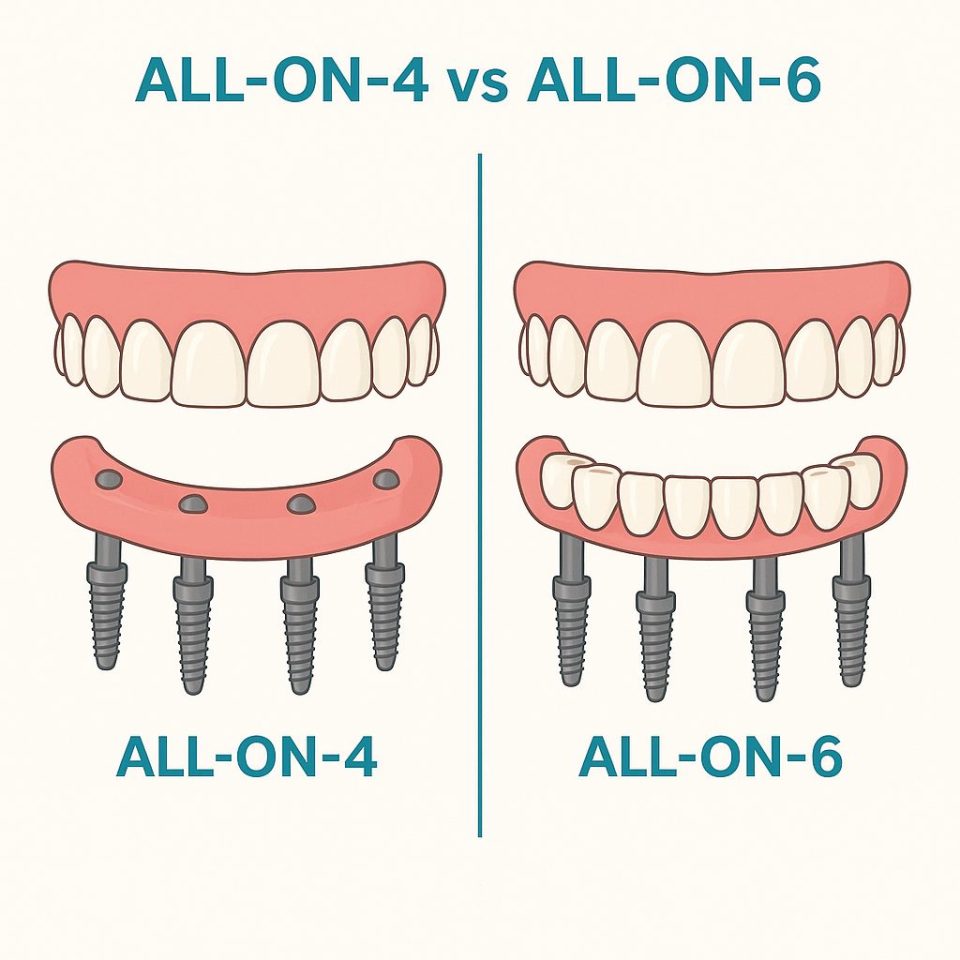
All-on-4 / All-on-6: These brand-designated implants represent four or six implants supporting a fixed bridge.
Fixed Hybrid Bridge: The screw-in bridge (usually made of zirconia or acrylic on a titanium base) that stays put by itself – only your dentist gets it off for adjustments.
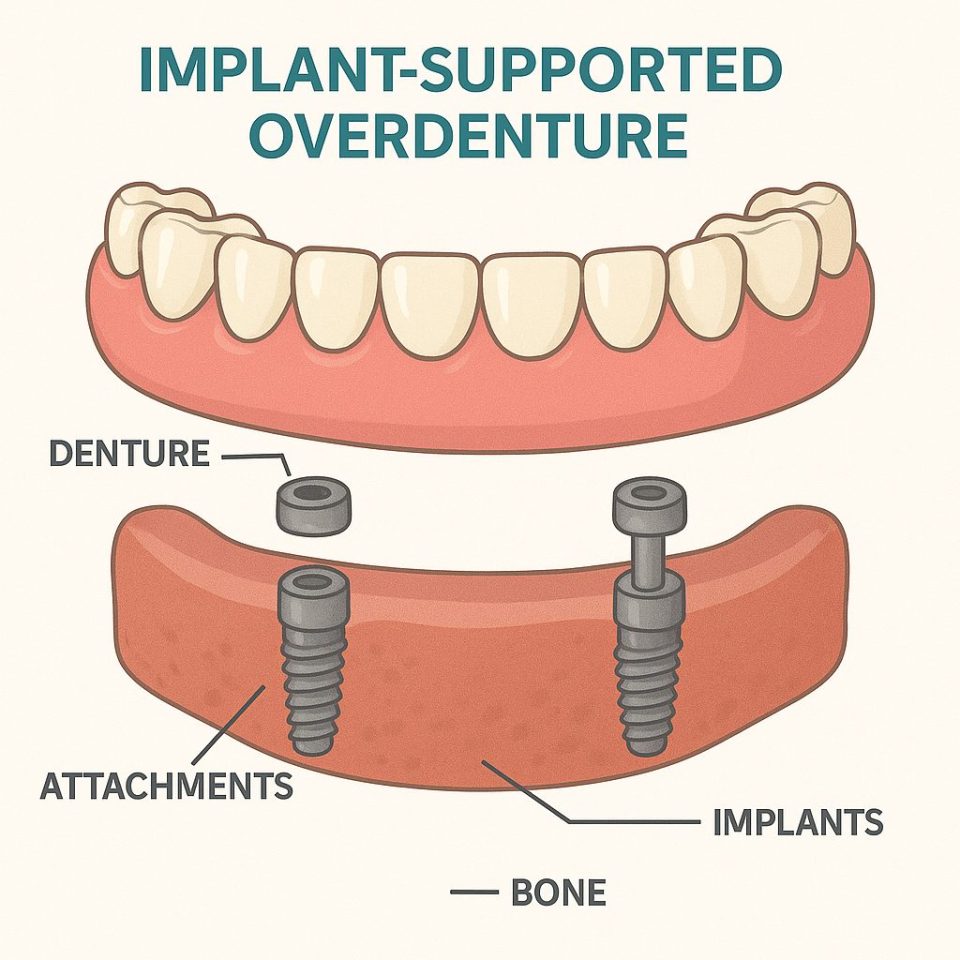
Implant-Supported Overdenture: This removable denture clicks on 2 to 4+ implants through an attachment or bar. More stable than conventional dentures but removable at home.
All these options work towards replacing a full arch of teeth with better stability, function, and confidence than that of conventional dentures.
Who is a good candidate?
Many healthy adults with multiple missing teeth—or those with failing teeth—are potential recipients. The dentist can determine by examining your:
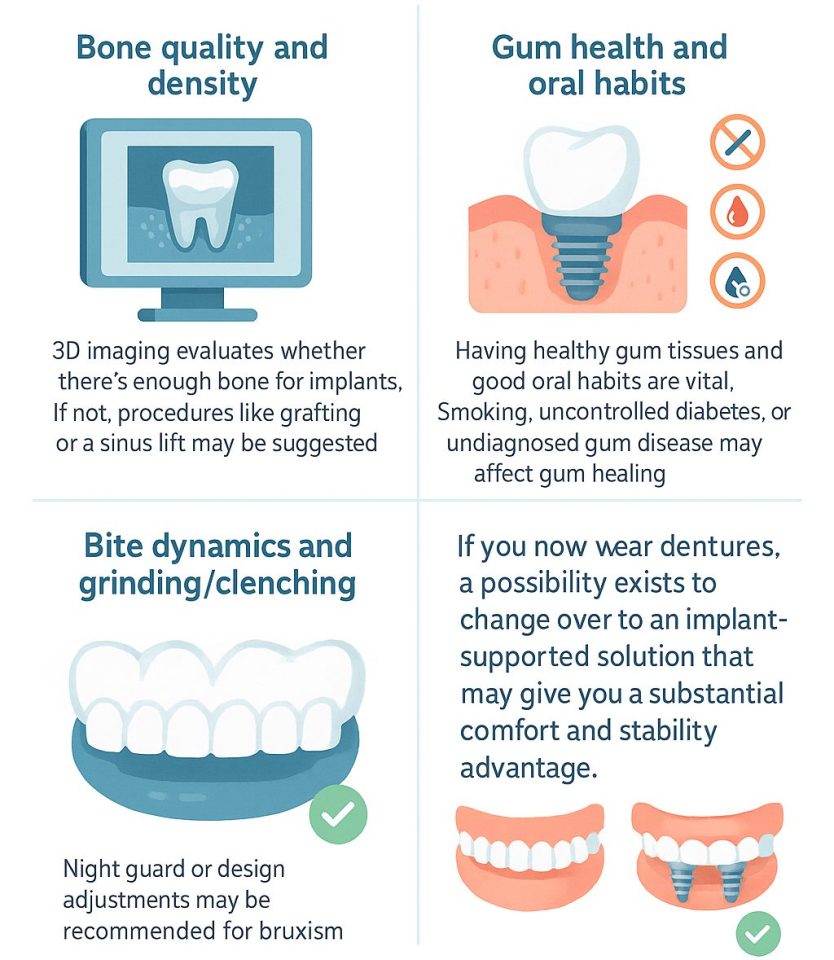
Bone quality and density: 3D imaging evaluates whether there’s enough bone for implants. If not, procedures like grafting or a sinus lift may be suggested.
Gum health and oral habits: Having healthy gum tissues and good oral habits are vital. Smoking, uncontrolled diabetes, or undiagnosed gum disease may affect gum healing.
Bite dynamics and grinding/clenching: Night guard or design adjustments may be recommended for bruxism.
If you now wear dentures, a possibility exists to change over to an implant-supported solution that may give you a substantial comfort and stability advantage.
How the process works
Many healthy adults with multiple missing teeth—or those with failing teeth—are potential recipients. The dentist can determine by examining your:
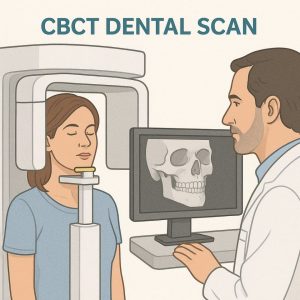
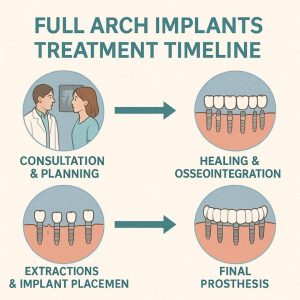
Consultation & Planning: The comprehensive exam, photos, scans – or often a CBCT 3D Scan – and impressions or digital scans of your mouth give us your treatment plan. Treatment choices from various types of procedures from fixed to removable work options, timelines, and costs. Cost options.
Extractions (if needed) & Implant Placement: The day of the surgery involves the removal of remaining teeth that cannot be saved and the precise insertion of the implants. Many dental offices now offer guided surgery. Sedation alternatives include local anesthesia and IV. That depends on your needs.
Immediate Teeth (if applicable): If your bone density and implant stability permit, a full arch implant-supported provisional (“teeth-in-a-day”) solution may be connected on the same day. This provisional bridge is intended for healing and soft foods only.
Healing & Osseointegration: The next 2-4 months may pass before your implant integrates with your bones. In the meantime, you’ll wear your provisional implant and maintain a soft foods diet.
Final Prosthesis
Once healed, precise impressions or digital scans are taken for your definitive bridge. Common choices include:
Monolithic Zirconia: Extremely strong. Highly polished. Still very lifelike. Resists staining.
Acrylic (PMMA) on Titanium: More affordable and relatively easy to repair.
Bar Retained Overdenture: Facilitates easy removal. Provides high retention.
Maintenance Program
You’ll come back periodically for check-ups and cleanings. This includes screw checks, replacement of the attachments (if an overdenture), as well as hygiene training.
How is it experienced on a daily basis?
Once the adjustment period has passed, most patients notice that the smile now feels stable as well as comfortable. Talking usually returns to normal within a few days, particularly for the top arch.
Risks and considerations
Dental implants can be very successful. However, like everything else in life, there can be complications. These may include some swelling around the site of the implant insertion, pain, temporization difficulties, acrylic parts that may break or chip off, as well as complications of the implant itself. These can be planned for and minimized.
How long do they last?
The fixtures can last for quite a number of years depending on the level of upkeep. The components may degrade after a given number of years. These may include acrylic teeth or another component. The components may deteriorate due to wear and tear.
Cost factors
The cost of treatment may range depending on the area of residence, the implants being used, whether additional grafting needs to be performed, and the final type of prosthetic used. Many of us may consider it an investment. Many offices offer financing options. Again, your consultation appointment will provide an estimate.
Full Arch Implants vs. Conventional Dentures
Stability: Implants win – no slipping, adhesives, or sore spots from rubbing.
Function: Increased biting efficiency and diet due to implants.
Bone Support: The implants help reduce bone loss; conventional dentures won’t.
Maintenance: Removing and cleaning dentures is simpler. Flossing equipment for fixed bridges may be specialized.
Initial Cost: Dentures cost less initially; implants offer long-term value in comfort and functionality.